
CHARACTERISTICS OF LIVER-CONFINED UNRESECTABLE HCC
Liver-confined unresectable HCC describes a heterogeneous tumor that cannot be removed using surgery, with high variability in tumor characteristics and underlying liver function.1–3 Due to the wide range of locoregional therapies available, systemic therapy has often been considered as a last resort for patients with very advanced disease.4
Patients may present with these tumors in various patterns, ranging from a large solitary tumor to multiple tumors throughout the liver, without the detection of extrahepatic spread.3
This patient group also requires an absence of macrovascular invasion, with larger tumors being more likely to demonstrate microvascular invasion and intrahepatic spread – both of which are independent risk factors for recurrence and mortality.3

Figure developed from National Comprehensive Cancer Network® (NCCN®) Clinical Practice Guidelines in Oncology (NCCN Guidelines®) 2025 and Prince D, et al. 2020.1,4
M=metastases; N=node; VP=portal vein invasion; Vv=hepatic vein invasion.
Figure adapted from Kudo M 2017.1
CURRENT TREATMENT OPTIONS
LRT, including arterially-directed therapies, radiation therapy and ablation, is a guideline-recommended treatment option for liver-confined unresectable HCC deemed ineligible for transplant.4,5
LRT
Multiple LRT modalities are recommended by guidelines for different clinical scenarios.4,5 The choice of which LRT to use is influenced by tumor size/number, location, liver function and patient factors6:
TAE4,7
Modality
Endovascular arterial occlusion via catheter to induce hypoxia and subsequent death of tumor cells
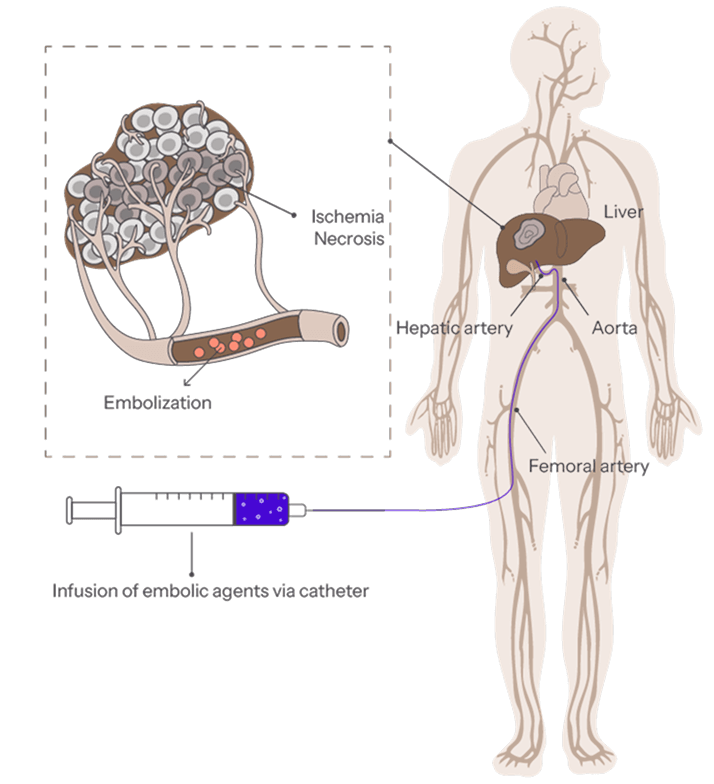
Adapted from Wang D and Rao W 2023.8
Patients with liver-confined unresectable HCC (contraindications include decompensated cirrhosis and high tumor burden).9
- Recommended for patients classified as BCLC-B9
TACE4,5
Modality
Combines TAE with a highly concentrated dose of chemotherapy delivered to tumor cells
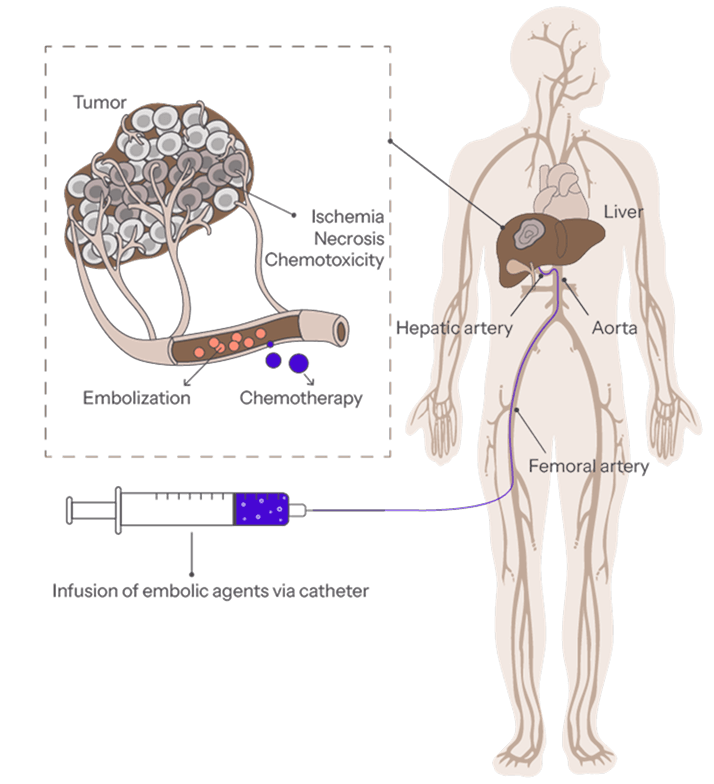
Adapted from Wang D and Rao W 2023.8
Guideline-recommended option for patients with liver-confined unresectable HCC, preserved liver function and no evidence of portal vein thrombosis1,8
TACE is considered to be safe in highly selected patients who have limited tumor invasion of the portal vein but is not recommended in those with liver function characterized as Child-Pugh Class C (absolute contraindication).4,9
- Most beneficial for patients with fewer lesions and good liver function (BCLC-B)9
TARE5,7
Modality
Endovascular arterial delivery via catheter of Y90 microspheres that emit high-dose beta radiation to the tumor-associated capillary bed
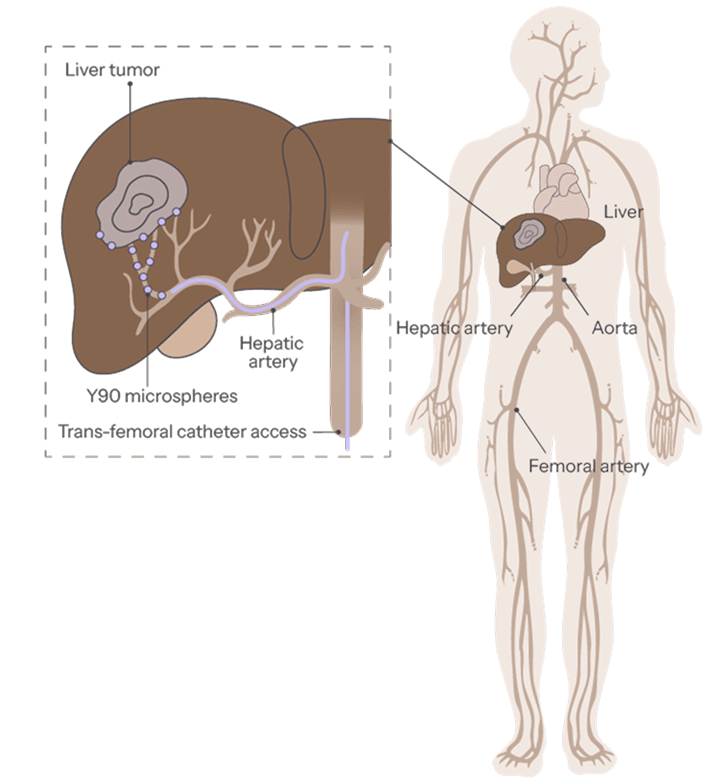
Adapted from Fite EL and Makary MS 2025.10
Guideline-recommended option for patients with liver-confined unresectable HCC, including patients with portal vein thrombosis1,8
May be appropriate in some patients with advanced HCC, specifically patients with segmental or lobar portal vein, rather than main portal vein thrombosis.4,9
- For patients beyond “up-to-7” threshold with greater tumor volumes (ie, largest tumors greater than 5–6 cm) and limited tumor numbers11
- Contraindications include >20% hepatopulmonary shunting, Child-Pugh Class C liver function, and signs of liver decompensation (eg, encephalopathy)7,9
SBRT4,12
Modality
Uses external beams to deliver large ablative doses of radiation in several fractions given over several days
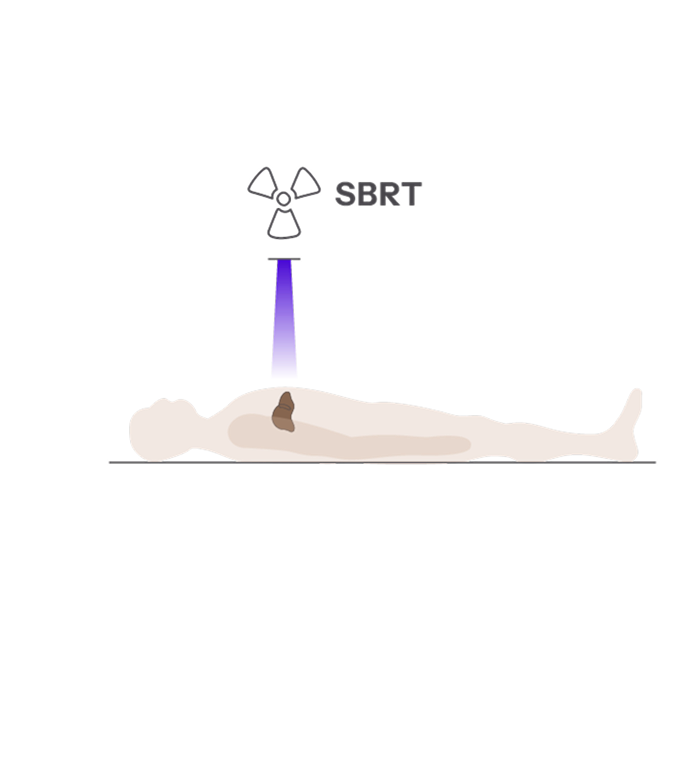
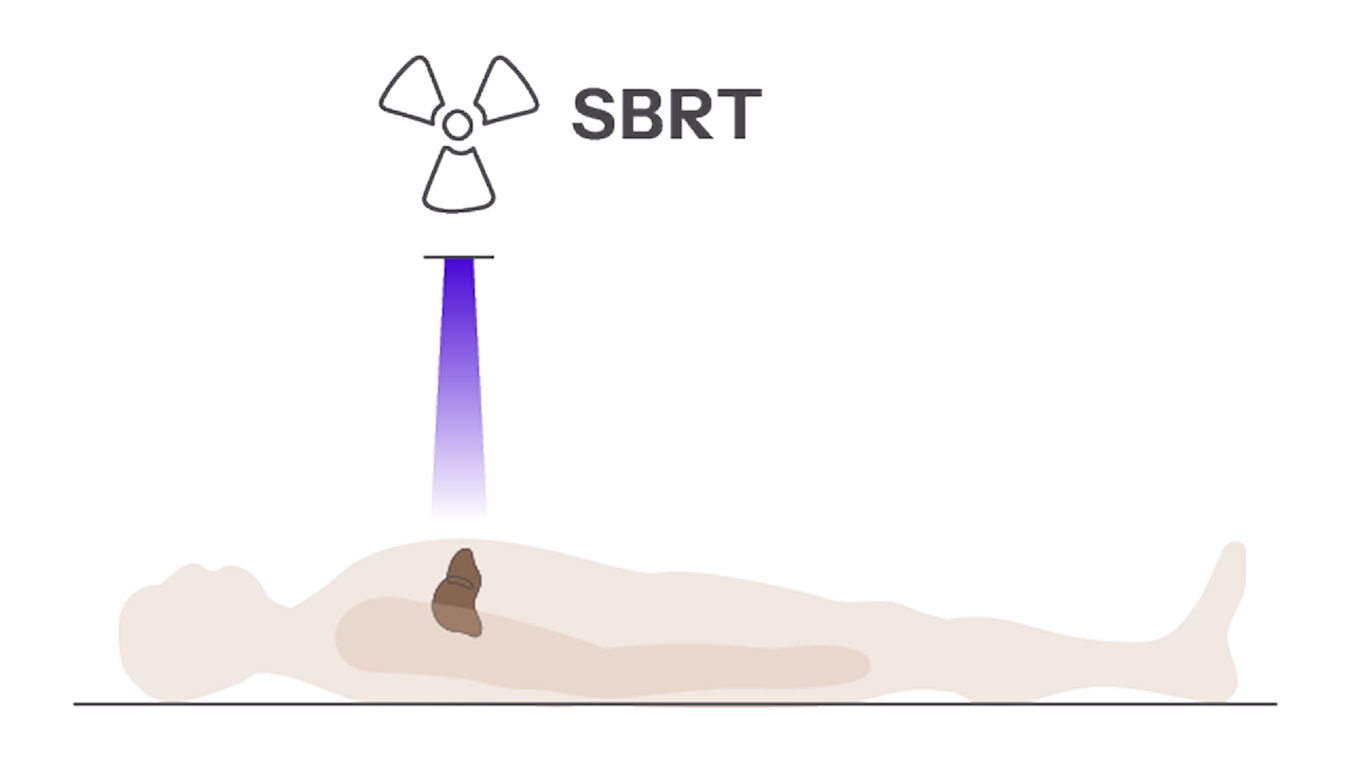
Adapted from Jumeau R, et al. 2020.13
Consideration as an alternative to ablation or other embolization techniques or when these therapies have failed/are contraindicated.4 SBRT is often used for patients with 1–3 tumors and could be considered for larger lesions or more extensive disease, if there is sufficient uninvolved liver and liver radiation tolerance can be respected. There should be no extrahepatic spread or it should be minimal and addressed in a comprehensive management plan.4
- Significant liver dysfunction is a contraindication to SBRT (eg, Child-Turcotte-Pugh score ≥8, uncontrolled ascites, or uncontrolled hepatic encephalopathy)5
UNMET NEED
There are several limitations associated with LRT for the management of HCC:

High recurrence rate and poor systemic control: Although LRT is effective for local tumor control, its long-term efficacy is often hindered by tumor recurrence and progression due to post-treatment angiogenic rebound,14 limiting its median progression-free survival.15 Recurrence is also common for patients treated with some LRTs both within the treated region and at other sites within the liver9

Technical/anatomical limitations: Tumor location and vascular anatomy may contribute to technical difficulties in some LRTs,5,16 such as limited arterial access or poor tumor vascularization14

Underlying liver function constraints: Because some LRTs can increase the risk of liver failure, hepatic necrosis, and liver abscess formation, eligible patients must have preserved liver function9

Liver function decline: Acute liver injury is commonly observed following some LRTs, which can become chronic in some patients.9,17 As a result, overexposure to these therapies can risk deterioration of liver function and liver failure9,18
These limitations contribute to an unmet need for treatment regimens that help reduce recurrence in patients with liver-confined unresectable HCC.
FUTURE THERAPEUTIC DIRECTIONS
Several trials are exploring combination regimens that include LRTs and systemic therapy to help overcome LRT limitations and improve patient outcomes.14

Treatment decision making in liver-confined unresectable HCC requires a multidisciplinary approach and consideration of several factors.
Let HORIZONS HCC be your compass in navigating the complexities and latest developments in HCC patient care.
Sign up to receive our email updates for the latest news, resources, and educational materials.
SIGN UPform open in a popup


